 SpotBar

How Many Grams in an Ounce? Troy vs Avoirdupois
How many grams are in an ounce depends on what you are measuring, and the answer is one of two numbers.
The ordinary kitchen scale measures in ounces, and one ordinary ounce is equal to approximately 28.35 grams. It is called an avoirdupois ounce, and it is what you'll find on every common item: groceries, packaged food, postage, paper.
One troy ounce of gold, silver, platinum, palladium, or any other precious metal is equal to 31.1035 grams. That's how the world has measured precious metals for centuries.
There is a difference of roughly 9.7% between the two ounces. Small enough to be missed but large enough to cost serious money when you buy or sell bullion. Most people who look up "how many grams in an ounce" do not even know there is another type of ounce in the first place.
| What you're weighing | Ounce type | Grams per ounce |
|---|---|---|
| Food, paper, packages, household items | Avoirdupois | 28.3495 |
| Gold, silver, platinum, palladium | Troy | 31.1035 |
| Apothecary measurements (rare today) | Apothecary | 31.1035 |
The troy ounce and the apothecary ounce both weigh the same. They were simply used as weights in different trade industries historically. In everyday language, an avoirdupois ounce (also called a standard or common ounce) is the "ounce" you encounter every day in the United States and the United Kingdom. For the rest of this post, "ounce" means avoirdupois unless we're talking about precious metals, in which case it's troy.
The two ounces, and why both still exist

The avoirdupois system is an expression that comes from Old French and roughly translates to "goods of weight." It was established as a way to measure the masses of all types of things, especially during the latter part of the Middle Ages. Over time it developed into a standardized system, with the United States, the United Kingdom, and several other countries using it for groceries, shipping, postage, and almost everything else they purchase. An avoirdupois pound is equal to sixteen avoirdupois ounces and weighs approximately 453.59 grams.
Troy weight is older than avoirdupois weight and originates from Troyes in France. Troyes was a large medieval market town located in the Champagne area of France. Merchants there established standards of measurement for trade in precious metals (gold and silver), coins, gems, and medicine. These standards were adopted throughout Europe at trade fairs and eventually around the world. Although the majority of commercial trade eventually shifted from troy to avoirdupois, the gold and silver industries continued using troy as an internationally accepted standard. A troy pound contains 12 troy ounces and weighs approximately 373.24 grams. Yes, the troy pound has only 12 ounces, not 16. It is a separate system, not a subset of avoirdupois.
That is the reason every gold price you'll find from Kitco, from the LBMA fix, from COMEX futures, or from your local coin shop is quoted per troy ounce. The World Gold Council confirms troy as the global standard for bullion pricing.
Where the avoirdupois ounce is used
- Groceries and packaged food (a "16 oz can" is 16 avoirdupois ounces)
- Postal weights and shipping
- Cosmetics and personal-care products
- General household items
- Body weight and most retail measurement in the U.S.
Where the troy ounce is used
- Gold, silver, platinum, palladium spot prices
- Bullion coins (American Eagles, Canadian Maples, Krugerrands)
- Investment-grade bars (1 oz, 10 oz, 100 oz, 1 kg)
- Refined metals reporting and contracts
How much the difference actually matters

If you mix up the two ounces while buying gold, the math goes wrong by about 9.7%. That is not academic. Worked example, with gold at $4,500 per troy ounce:
- Correct per-gram price (troy): 4,500 ÷ 31.1035 = $144.69/g
- Wrong per-gram price (avoirdupois): 4,500 ÷ 28.3495 = $158.74/g
For a 100-gram gold bar:
- Correct: 100 × $144.69 = $14,469
- Wrong: 100 × $158.74 = $15,874
A $1,400 difference on a single 100-gram bar simply from being one ounce off. The error scales linearly when you are buying multiple kilograms.
The same percentage error applies to silver at $50/oz, platinum, and palladium. The percentages are identical across all the metals. However, the difference in dollar terms grows or shrinks with the underlying price.
This is also one reason why some buyers think gold sellers are charging too much when they are not. When buyers calculate what they think the per-gram price should be, using the wrong ounce divisor, they can convince themselves they have been overcharged. What has actually happened is the buyer's math is off by 9.7%. The seller's price is honest.
Conversion table for common amounts
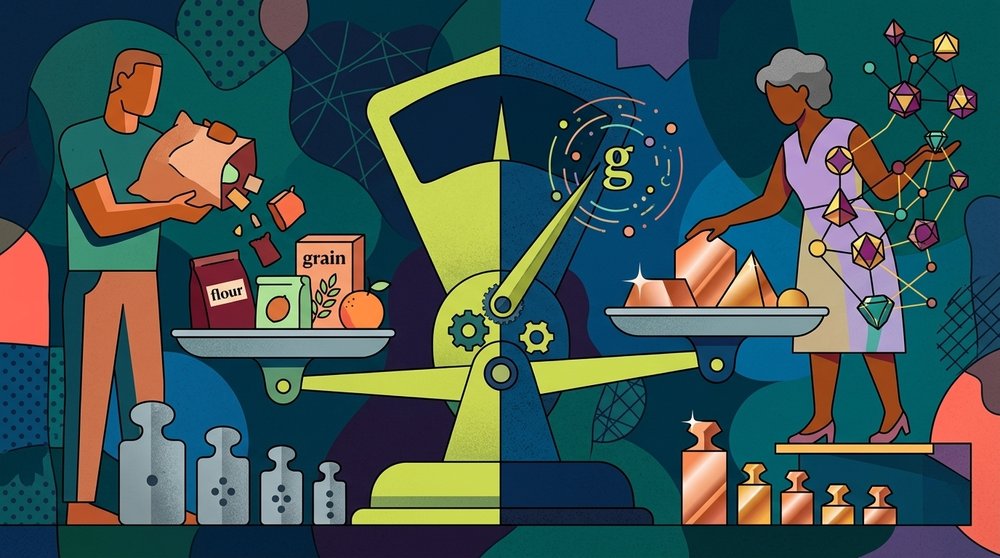
The most common conversion questions for both troy and avoirdupois.
| Quantity | Avoirdupois (everyday) | Troy (precious metals) |
|---|---|---|
| 1/4 ounce | 7.0874 g | 7.7759 g |
| 1/2 ounce | 14.175 g | 15.552 g |
| 3/4 ounce | 21.262 g | 23.328 g |
| 1 ounce | 28.3495 g | 31.1035 g |
| 2 ounces | 56.699 g | 62.207 g |
| 5 ounces | 141.748 g | 155.518 g |
| 10 ounces | 283.495 g | 311.035 g |
| 1 pound (16 avdp oz / 12 troy oz) | 453.59 g | 373.24 g |
| 1 kilogram | 35.274 oz | 32.1507 oz |
Each of the 1/4 oz, 1/2 oz, and 1 oz coins produced by major mints (American Gold Eagle, Canadian Maple Leaf, Krugerrand) is sold in troy ounces. So a 1/4 oz Gold Eagle weighs approximately 7.78 grams of pure gold, not 7.09 grams.
Common precious-metals conversions

If you work with bullion or jewelry, these are the conversion factors you will be using on a daily basis.
- Gram = troy ounce price ÷ 31.1035. So at $4,500/oz gold, that is $144.69 per gram.
- Kilo = troy ounce price × 32.1507. So at $4,500/oz gold, that is $144,678 per kilo.
- Tola (used in India, Pakistan, the Middle East) = 11.6638 g, so spot ÷ 31.1035 × 11.6638. At $4,500/oz that is $1,687 per tola.
- Baht (used in Thailand for gold jewelry) = 15.244 g (slightly different for jewelry vs bullion, but 15.244 is the standard for traded gold). At $4,500/oz that is roughly $2,205 per baht.
To find the melt value of a karat-grade gold piece used in jewelry, you first convert the per-troy-ounce price into a per-gram price for pure gold, then multiply by the karat fraction. The karat number represents the gold content by weight. A 14-karat item is 14/24 = 0.583 gold (by weight) and the remaining 0.417 is other metals (usually copper and silver in the alloy). So a six-gram 14-karat gold ring at $4,500 per ounce has a melt value of: 6 grams × 0.583 × $144.69/g = $506.
Mental shortcuts that work
If you don't have a calculator handy when you're shopping for coins, the following approximations get you close.
- A troy ounce is about 31 grams. Slightly low (real value is 31.1), so dividing per-ounce price by 31 gives you a per-gram estimate that is a hair too high. Conservative for buyers.
- A kilo is about 32 troy ounces. Multiplying troy-ounce price by 32 gets you within half a percent of the real per-kilo price.
- A tola is roughly a third of a troy ounce. Specifically 0.375. So multiplying per-ounce price by 0.375 gives the per-tola price quickly.
- An avoirdupois ounce is about 28 grams. Off by 0.35, but close enough for grocery-style estimates.
Frequently asked questions

Is a troy ounce heavier than a regular ounce?
Yes. A troy ounce is approximately 31.1035 grams. An avoirdupois ounce is approximately 28.3495 grams. So a troy ounce is about 9.7% heavier than an avoirdupois ounce. Many buyers do not realize this difference because the pound relationship is reversed: the regular (avoirdupois) pound weighs more than a troy pound, because it contains 16 ounces (which are smaller than troy ounces) whereas the troy pound contains 12 ounces (which are larger).
Is 28 grams an ounce?
Close, but not quite. The avoirdupois (common) ounce is 28.3495 grams, generally rounded to 28.35 or 28.4 grams. The troy ounce used for precious metals is different. A troy ounce is 31.1035 grams.
How many grams in 1/2 oz of gold?
A 1/2 troy ounce piece of gold weighs approximately 15.55 grams. (An everyday item weighing 1/2 avoirdupois ounce weighs in at about 14.17 grams.)
How many grams in 1/4 oz of gold?
A quarter troy ounce of gold is 7.78 grams. The 1/4 oz coin is one of the most popular fractional bullion sizes from major mints.
How many grams in a pound?
A regular (avoirdupois) pound is 16 avoirdupois ounces and weighs 453.59 grams. A troy pound contains 12 troy ounces and weighs 373.24 grams. The troy ounce is heavier than the avoirdupois ounce, but the avoirdupois pound weighs more than the troy pound, because of the difference in number of ounces in each system.
How many grams in a kilogram?
A kilogram is exactly 1,000 grams (the kilogram is the SI base unit of mass). For precious metals, that is approximately 32 troy ounces (32.1507 to be exact). At a spot price of $4,500 per troy ounce, a 1 kg gold bar contains $144,678 worth of gold.
Why does my kitchen scale show different ounces than my coin says it weighs?
Kitchen scales are calibrated for avoirdupois weight. So when you place a one-troy-ounce silver coin on your kitchen scale, it will register as 1.097 ounces or 31.1 grams. The two readings are equivalent and both correct. The gram value is the true mass, and the ounce value is just expressed in avoirdupois. Your kitchen scale will always show a slightly higher ounce number for a given precious-metals coin than the coin's labeled troy-ounce weight.
Where does the troy ounce come from?
From Troyes, a French market town in the Champagne region. Merchants there established standards for measuring precious metals. Those standards were adopted by trade fairs across Europe and eventually became the international standard for valuing gold bullion.
If you find yourself often converting between ounces, grams, tolas, and kilos for precious metals, an app that does live conversions in your menu bar takes the math out of the equation. SpotBar shows live spot prices with per-troy-ounce, per-gram, per-tola, and per-kilo display on Pro. Free download for Mac and Windows, gold-only on the free tier.